Leave Your Message
0%

China has really become a key player when it comes to manufacturing industrial circular connectors. You know, like those compact M20 types used in automation systems, sensors, control cabinets, and outdoor gear. In this guide, I’ll introduce you to six Chinese companies that are involved with the 6 Pol Connecter M20 category—and we’ll look at what they really bring to the table in practical terms.

We focus on a bunch of important factors like how the connector is designed, whether the contacts stay stable, how well it seals, the quality of the materials, and if their production stays consistent. It’s not just about how it looks—testing should include things like how many mating cycles it can handle, how well it keeps the cable attached, resistance to vibrations, and its ability to keep out dust and water. Details matter, for real. You might see a connector that looks sturdy, but the terminals could struggle under repeated movement or shifting temperatures.

We’re looking at these manufacturers from a practical engineering and purchasing angle—no fake advertising claims here. So, it’s really important to compare their product pages, technical docs, manufacturing skills, customization options, and quality certifications carefully. If you’re thinking about buying, make sure you double-check the pin configurations, ratings for current and voltage, cable ranges, locking styles, and how quickly they can deliver. Small mistakes in details can end up costing a lot if you’re using these on a production line.

Just a heads-up: this isn’t meant to rank these companies permanently. Their performance can change over time, depending on materials, batches, and quality control. Some might offer fantastic customization but have limited documentation, while others might provide solid standard products but less flexible support—those differences really matter when it counts.

In the sections ahead, I’ll help you compare China’s top six M20 connector manufacturers so you can set the right expectations. Remember, seeing real-world proof of their performance beats shiny marketing claims every time.
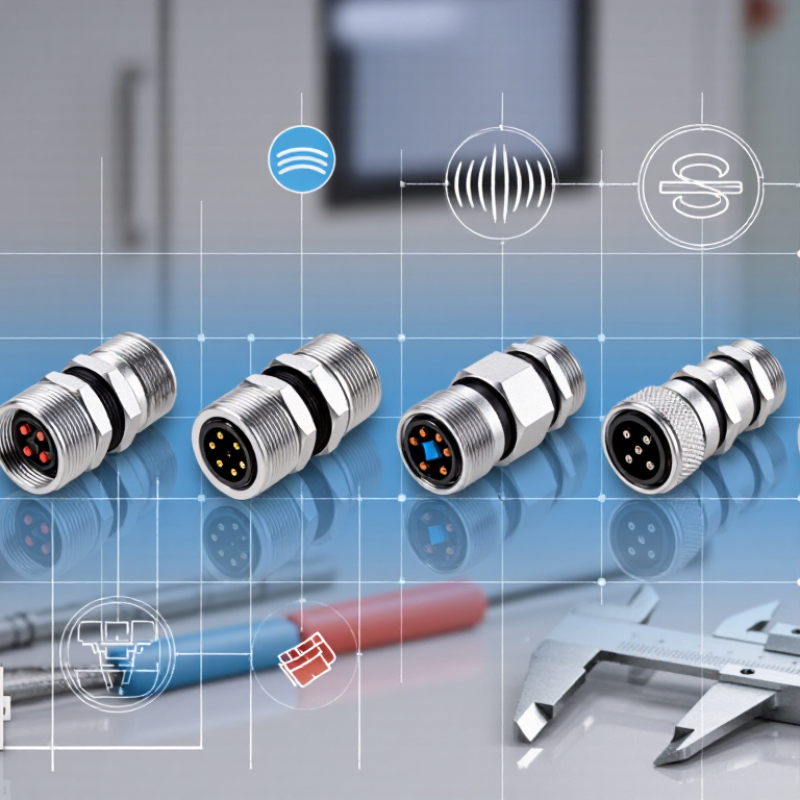
China Top 6 Pole M20 Connector Manufacturers

China’s Top Six M20 Connector Makers: IEC, IP, Current, and Cycle Benchmarks

China’s six leading M20 connector manufacturers should be compared through evidence, not catalog rankings. A reliable review checks IEC test documentation, contact materials, sealing design, and production traceability. For outdoor pole cabinets, IP67 is a practical baseline, while IP68 requires a stated test depth and duration. Vague “waterproof” claims are not enough. Current ratings also need attention. A connector marked 10 A may reach that value only with specific wire sizes, temperatures, and contact layouts.

Field experience shows that thermal performance often matters more than headline current. Inspectors should compare voltage drop, temperature rise, insulation resistance, and dielectric strength under controlled conditions. M20 connectors used near lamps, sensors, or street-control modules may face vibration, dust, and repeated maintenance. A useful cycle benchmark records at least 500 mating cycles, although demanding projects may require 1,000 or more. IEC-based reports should identify the exact model and test conditions. Otherwise, comparisons become weak.

Tips: Ask for IP test records, cycle-test data, and current derating curves. Check whether the locking ring remains firm after repeated handling. Examine threads for clean engagement and inspect seals for uneven compression. One detail is easy to miss: cable diameter tolerance can change sealing reliability. I would also request samples before approving volume orders. Specifications look convincing, but real assembly sometimes exposes small design flaws.

M20 6-Pole Standards: IEC 61076, M20×1.0 Threads, and IP67/IP68

China Top 6 Pole M20 Connector Manufacturers

Choosing an M20 6 Pins Connector requires more than counting contacts. Reliable manufacturers should document materials, test methods, and production controls. The connector must match the equipment’s voltage, current, cable size, and installation environment. A clear datasheet matters.

IEC 61076 provides a useful reference for connector interfaces and performance requirements. However, it is not a blanket approval for every M20 product. Check the exact series, contact arrangement, coding, and mating dimensions. The M20×1.0 thread needs accurate machining. Even a small thread error can cause cross-threading or weak panel mounting. Inspectors should verify thread gauges, pin spacing, and insertion force during sampling.

IP67 protects against temporary immersion and dust ingress. IP68 usually indicates deeper or longer immersion, but the test conditions must be stated. Look for sealing details around the rear cable clamp, panel gasket, and pin contacts. A connector may pass laboratory testing yet fail after repeated bending or poor cable preparation. That point is often underestimated. Field experience suggests checking the seal after installation, not only before shipment. Manufacturers with traceable batch records, routine electrical tests, and documented IP reports offer stronger reliability. Still, specifications can be incomplete. Ask for the missing evidence.

Electrical Ratings: 2–15 A, 30–300 V, and Below 10 mΩ Contact Resistance

China Top 6 Pole M20 Connector Manufacturers

Electrical Ratings: 2–15 A, 30–300 V, and Below 10 mΩ Contact Resistance

China’s leading six-pole M20 connector manufacturers compete around practical electrical limits. Their product ranges commonly cover 2–15 A and 30–300 V, supporting sensors, control cabinets, lighting, and compact industrial equipment. A 15 A rating is useful, but only when cable size, ambient temperature, and duty cycle match the datasheet.

Contact resistance below 10 mΩ can reduce heat at the mating point. However, this value usually describes new, clean contacts under controlled laboratory conditions. The IEC 60512 test series evaluates connector resistance, current loading, vibration, and environmental durability. Real installations may perform differently.

Small details matter.

The 2024 Bishop & Associates connector market report valued global connector sales at approximately 84.5 billion US dollars in 2023. That scale reflects strong demand, but market size does not prove individual reliability. Buyers should request test reports, mating-cycle results, and resistance data after environmental exposure. IP protection, insulation resistance, and temperature rise also deserve attention.

A careful comparison should check whether the 2–15 A rating applies to every contact or the entire connector. It should also confirm voltage limits for AC and DC applications. Some catalog tables remain unclear. That is where independent verification becomes worthwhile.

Mechanical Reliability: 500–1,000 Mating Cycles and 50 N Cable Retention

China Top 6 Pole M20 Connector Manufacturers

For M20 pole connectors, mechanical reliability is more than a catalogue number. The key evidence is repeatable testing. A credible supplier should document 500 to 1,000 mating cycles under IEC 60512 test methods. After cycling, contacts should maintain stable resistance, and locking threads should show no visible damage. Small details matter. A gritty thread can signal poor machining or weak surface treatment.

Cable retention also deserves direct inspection. A 50 N axial pull test checks whether the clamp, seal, and cable jacket work together. IEC 60512 includes mechanical and cable-retention test procedures, while IEC 60529 supports ingress-protection verification. Supplier reports should identify cable diameter, pulling speed, test temperature, and failure criteria. Without these details, “50 N tested” remains incomplete evidence. Independent laboratory records are stronger than internal claims.

When comparing China’s top six M20 pole connector manufacturers, request cycle-test curves, retention results, and sample traceability. Industry connector reliability reports commonly stress that vibration, contamination, and repeated assembly accelerate contact degradation. Field experience confirms this, especially on outdoor cabinets and control poles. Still, 1,000 cycles may not represent every installation. That is the uncomfortable part. A connector can pass laboratory testing yet fail after poor cable routing or excessive side loading. Suppliers should state these limitations clearly. Good engineering is not perfect marketing.

Materials and EMC Design: CuZn Contacts, PA66 Housings, and 360° Shielding

China Top 6 Pole M20 Connector Manufacturers

For six-pole M20 connectors, material selection decides more than mechanical fit. CuZn contacts provide useful strength and moderate conductivity, typically around 15–28% IACS, depending on alloy and plating. Tin plating supports economical power connections. Gold plating suits low-level signals and repeated mating. The choice should follow current, cycle life, and corrosion exposure.

PA66 housings offer good insulation and impact resistance. However, standard PA66 may absorb moisture and lose dimensional stability. A flame-retardant, glass-filled grade can improve heat performance. Confirm the actual UL 94 rating, operating temperature, and water-absorption data. MarketsandMarkets valued the global connector market at approximately USD 84.5 billion in 2023. It projects about USD 101.7 billion by 2028, showing steady demand for reliable interconnects.

EMC design needs a continuous metal path. A 360° shield termination is stronger than a single drain wire or narrow pigtail. IEC 60512-23-3 provides a recognized method for measuring connector screening effectiveness. In field testing, gaps often appear around backshells, cable clamps, and painted mating surfaces. Small gaps matter. Shield transfer impedance, grounding continuity, and cable rotation should be tested together. CISPR 25 testing is useful for vehicle and industrial applications, but laboratory results may not match installation conditions. That is an uncomfortable limitation. A supplier comparison should request actual test curves, not only “EMI protected” claims.

Supplier Comparison: MOQ, 7–30-Day Lead Times, and OEM Customization

China Top 6 Pole M20 Connector Manufacturers

Supplier comparison should begin with MOQ, not catalog price. For six-pole M20 connectors, Chinese manufacturers commonly quote 100–500 pieces for standard designs. Lower MOQs may require higher unit prices. Custom housings often begin near 500 pieces. According to Grand View Research, the global electrical connectors market reached approximately USD 84.9 billion in 2023. Its projected 6.8% annual growth increases pressure on suppliers to shorten production cycles.

Lead times usually range from 7 to 30 days. Standard black nylon housings may ship within one week. Molded cable assemblies often require 15–20 days. New tooling, special plating, or waterproof testing can extend delivery beyond 30 days.

Ask for separate dates for samples, tooling, and mass production. A promised lead time without production capacity evidence is weak.

OEM customization may include pin assignment, cable length, locking thread, sealing material, and logo-free packaging. Request drawings, tolerance data, IP test records, and material certificates. IEC and ISO-based quality systems improve traceability, but certification claims still need verification.

One practical concern remains: MOQ figures sometimes exclude tooling and testing costs. That detail can change the real purchasing decision.

Application Fit: Automation, Sensors, and Outdoor Equipment from −40 to 105°C

China’s Top 6 Pole M20 Connector Manufacturers

For automation panels, sensors, and outdoor equipment, temperature fit matters more than catalog variety. A six-pole M20 connector must maintain contact pressure from −40°C to 105°C. Materials, sealing geometry, and cable flexibility decide whether that claim survives field use.

MarketsandMarkets valued the industrial automation market at about USD 191 billion in 2023. It projects approximately USD 265 billion by 2028. This growth increases demand for compact connectors near motors, controllers, and sensor junctions. Under IEC 60529, outdoor assemblies may require IP65, IP67, or higher protection. However, an IP rating alone does not prove performance after thermal cycling, vibration, or ultraviolet exposure.

When comparing six manufacturers in China, request test evidence for the complete assembly, not only the connector body. Check mating cycles, insulation resistance, salt spray results, and current derating at 105°C. Sensor cables often bend repeatedly, while automation wiring faces oil mist and electrical noise. Outdoor units also need stable sealing after repeated freezing and heating. A connector can pass a laboratory test and still disappoint during installation. I would examine cable diameter tolerance carefully. Small dimensional errors can weaken the seal. Supplier audits, traceable materials, and sample testing improve reliability, although they cannot remove every field risk.

China Top 6 Pole M20 Connector Manufacturers - Application Fit: Automation, Sensors, and Outdoor Equipment from −40 to 105°C
Rank Anonymous Supplier Profile Typical M20 Pole Options Operating Temperature Ingress Protection Typical Electrical Range Typical Cable Range Mating and Locking Best Application Fit Selection Notes
1 Profile A
High-Temperature Industrial Series
3, 4, 5, 8, 12 poles −40 to +105°C IP67 / IP68 when mated and correctly assembled Commonly up to 250 V AC/DC and 4–10 A per contact, subject to pole count and conductor size Approximately 5–13 mm outer diameter Threaded M20 coupling; screw termination or crimp contacts PLC I/O Servo systems Industrial sensors Suitable for heat-exposed control cabinets and machinery wiring.
2 Profile B
Compact Sensor Connector Series
3, 4, 5, 6 poles −40 to +105°C IP65 / IP67, depending on housing and cable assembly Typically 30–60 V DC for sensor and signal circuits; current commonly 1.5–4 A per contact Approximately 3–8 mm outer diameter Threaded M20 coupling with keyed inserts Photoelectric sensors Proximity sensors Machine vision Prioritizes compact diameter, signal integrity, and quick field installation.
3 Profile C
Outdoor-Rugged Connector Series
2, 3, 4, 5, 8 poles −40 to +105°C IP67 / IP68; UV-resistant versions available Commonly 60–300 V AC/DC and up to 5–12 A per contact, depending on insert design Approximately 6–14 mm outer diameter Threaded coupling with sealing gasket and strain relief Outdoor control boxes LED equipment Traffic systems Use UV-stabilized housing and weather-resistant cable jackets for exposed installations.
4 Profile D
High-Density Automation Series
8, 10, 12, 14 poles −40 to +105°C IP67 when mated; panel sealing depends on gasket design Typically 30–125 V AC/DC and 1–3 A per contact for multi-signal arrangements Approximately 4–10 mm outer diameter Keyed insert with threaded M20 coupling ring Remote I/O Encoders Motion control Good fit where several low-current signals must share one compact connector.
5 Profile E
Power-and-Signal Hybrid Series
3, 4, 5, 7 poles −40 to +105°C IP67 / IP68 when fully mated Typically 250–500 V AC/DC; power contacts may support 8–20 A depending on conductor size Approximately 7–15 mm outer diameter Threaded M20 coupling with separated power and signal contacts Small drives Actuators Motorized equipment Verify creepage, clearance, thermal derating, and contact spacing for higher voltage use.
6 Profile F
Cost-Optimized General Industrial Series
2, 3, 4, 5, 8 poles −40 to +85°C; selected versions reach +105°C IP65 / IP67 Commonly 125–250 V AC/DC and 2–10 A per contact, depending on configuration Approximately 5–12 mm outer diameter Standard threaded M20 coupling; field-wireable options available Factory automation Control panels General machinery Confirm the exact temperature rating when continuous operation above +85°C is required.
Technical values are representative industry ranges for M20 circular industrial connectors. Actual ratings depend on pole count, contact spacing, conductor cross-section, cable material, housing material, mating condition, and applicable product certification. IP ratings apply only when the connector, seal, cable, and installation method are correctly matched.

FAQS

What should I verify before choosing a six-pole M20 connector?

Match the connector with voltage, current, cable size, and installation conditions. A clear datasheet is essential.

Does IEC 61076 automatically approve every M20 connector?

No. Check the exact series, contact layout, coding, and mating dimensions. The standard is only a reference.

Why does the M20×1.0 thread require careful inspection?

Incorrect machining can cause cross-threading or weak panel mounting. Use thread gauges during sample inspections.

What does an IP67 rating protect against?

IP67 protects against dust and temporary immersion. It does not prove long-term outdoor durability.

What extra information should I request for an IP68 connector?

Ask for immersion depth, test duration, and test conditions. IP68 meanings can vary between products.

Which sealing areas deserve close attention?

Inspect the rear cable clamp, panel gasket, and contact seals. Cable preparation matters too.

Can a connector rated from −40°C to 105°C work everywhere?

Not necessarily. Check materials, cable flexibility, contact pressure, and sealing after thermal cycling.

What testing evidence should a supplier provide?

Request electrical tests, insulation resistance, mating cycles, salt spray results, and current derating data.

Why should I test the complete cable assembly?

The connector body may pass alone, while the assembled cable fails after bending or installation.

What common detail is easy to underestimate?

Cable diameter tolerance. A small mismatch can weaken the seal. Field results may differ.

Conclusion

China’s leading six-pole M20 connector manufacturers are evaluated through practical benchmarks covering IEC 61076 compatibility, M20×1.0 threading, and IP67/IP68 protection. A reliable 6 Pol Connecter M20 solution should support electrical ratings from 2–15 A and 30–300 V, while maintaining contact resistance below 10 mΩ. Mechanical performance is equally important, with typical designs targeting 500–1,000 mating cycles and cable retention of up to 50 N for dependable installation and long-term service.

Material and EMC considerations include CuZn contacts, durable PA66 housings, and optional 360° shielding to reduce electromagnetic interference. Supplier selection also depends on MOQ, estimated 7–30-day lead times, and OEM customization capabilities. With operating temperatures commonly ranging from −40 to 105°C, these connectors are suitable for industrial automation, sensors, control systems, and outdoor equipment where compact size, environmental protection, stable transmission, and consistent manufacturing quality are essential.
Ethan

Ethan

Ethan is a dedicated marketing professional with a deep expertise in advanced connection solutions. With a strong focus on the high-tech sector, he plays a pivotal role at Jnicon Group, where he passionately promotes the company’s innovative product lines, including industrial connectors,......
Previous How to Choose the Right Copper Wire Splice Connector?